
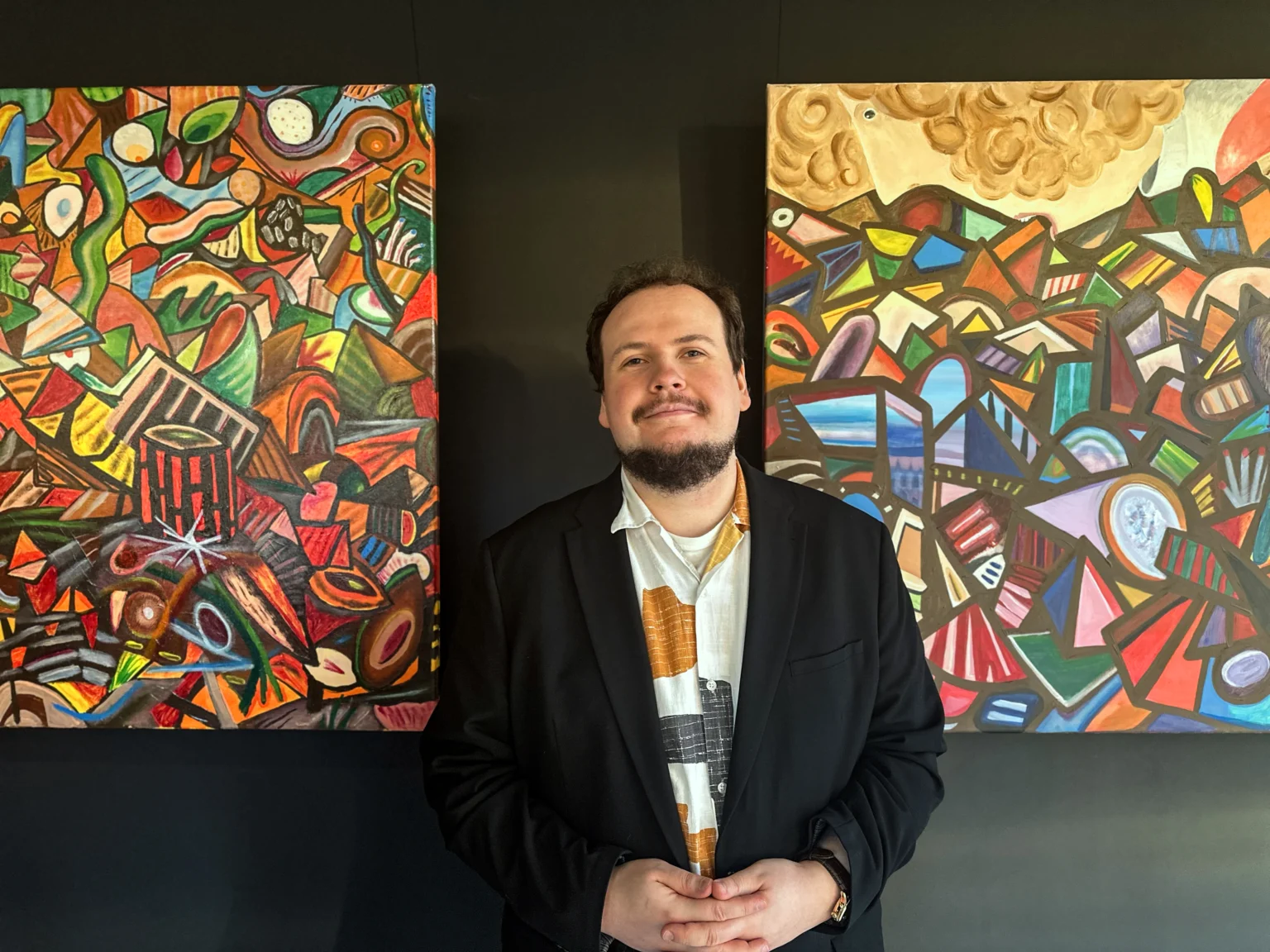
When over stimulation becomes wild/Fauvistic
Jakub Kułakowski’s work immediately asserts itself through a striking visual intensity. His paintings do not seek silence or restraint; instead, they embrace excess, accumulation, and emotional overflow as a genuine language. At first glance, the viewer is immersed in a dense universe where fragments of faces, objects, symbols, and abstract forms coexist within a constantly shifting pictorial space. Yet beyond this apparent chaos lies a deeply human sensitivity.
Kułakowski’s practice reveals an attempt to translate contemporary overstimulation into painting while preserving moments of vulnerability, humor, and emotional resonance.His vivid chromatic palette and instinctive handling of form evoke certain legacies of Fauvism, particularly the emotional use of color found in painters such as Henri Matisse, André Derain, and Georges Rouault. Like the Fauvist painters, Kułakowski privileges sensation over strict realism, allowing color and distortion to become expressive forces in themselves. However, rather than simply revisiting Fauvist aesthetics, he reinterprets them through the lens of contemporary visual overload and fragmented perception. His work stands at the intersection of instinct and construction, where saturation becomes not only an aesthetic strategy but also a way of experiencing the world.
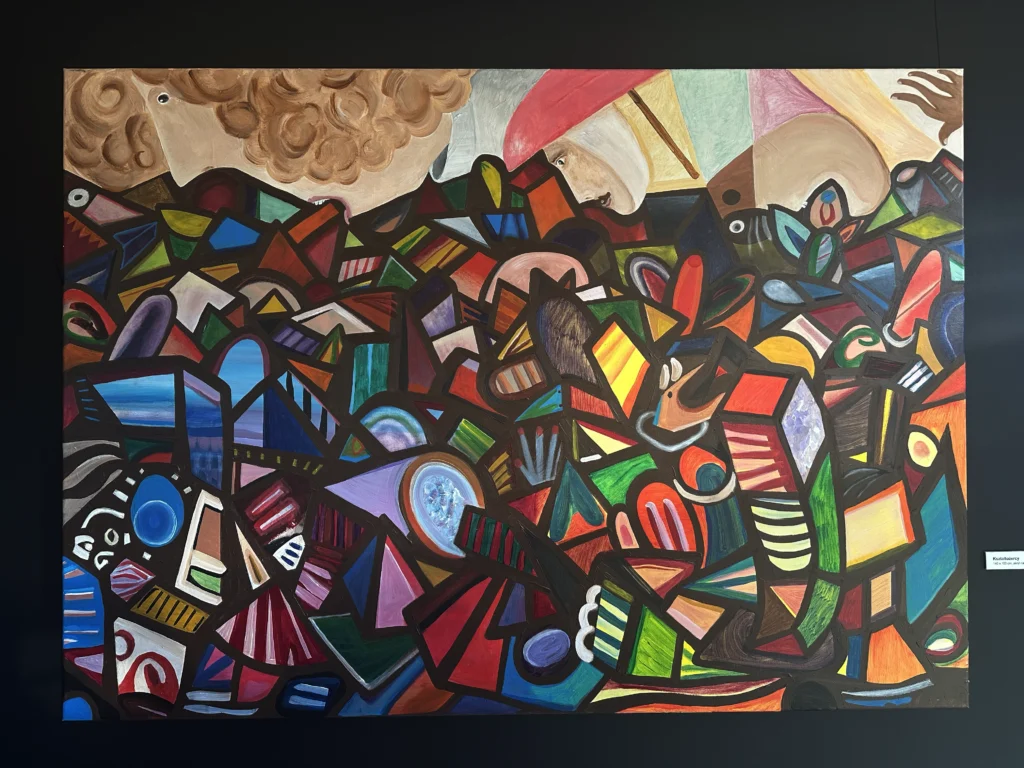
AN AESTHETIC OF OVERSTIMULATION
One of the most compelling aspects of Kułakowski’s painting is its ability to recreate the sensory excess of contemporary life. His compositions are filled with competing forms, vibrant colors, and overlapping visual information, generating a sensation that feels both playful and overwhelming. Rather than guiding the viewer through a clear narrative, the paintings encourage wandering and active observation. The eye continuously shifts between recognizable elements and abstract disruptions, creating a dynamic visual rhythm. This instability becomes productive: the viewer is not simply looking at the painting but navigating through it.This intense chromatic freedom recalls the Fauvist rejection of naturalistic color. Much like Matisse or Derain, Kułakowski treats color as an emotional structure rather than a descriptive tool. Bright reds, acidic greens, and saturated blues collide across the surface, producing an atmosphere driven more by feeling than representation. Yet unlike historical Fauvism, which often celebrated liberation and pleasure, Kułakowski’s saturation also reflects the anxiety and fragmentation of contemporary visual culture.
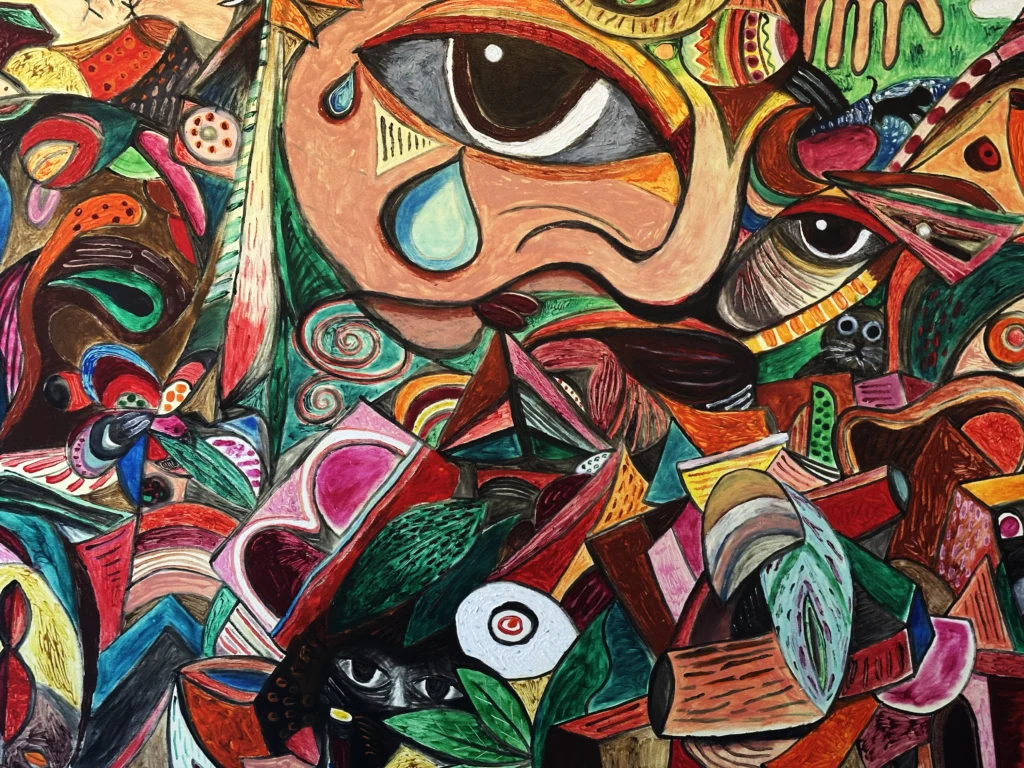
BETWEEN FIGURATION AND ABSTRACTION
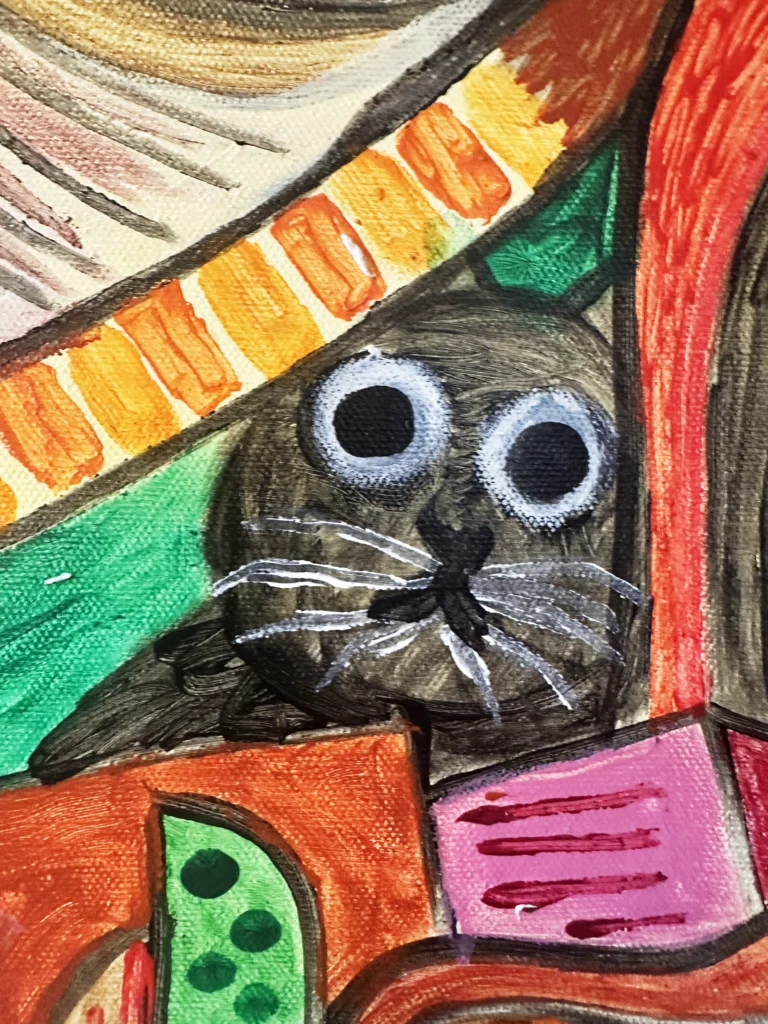
A particularly interesting quality of Kułakowski’s work lies in the tension between figurative softness and abstract fragmentation. Rounded faces, eyes, and organic motifs emerge from angular structures and broken geometries, producing moments of temporary familiarity within a chaotic environment. These figurative fragments act almost like emotional anchors, allowing the viewer to reconnect with the image before being pulled back into complexity. This oscillation between readability and disorientation gives the paintings their psychological depth.In this regard, his work can also be connected to the darker emotional dimension present in the paintings of Georges Rouault, whose distorted figures and thick outlines transformed expression into something deeply psychological. Kułakowski similarly allows forms to remain unstable and emotionally charged, refusing polished clarity in favor of raw immediacy. Rather than opposing abstraction and figuration, he allows them to coexist within the same visual field, reflecting the fragmented nature of perception itself.
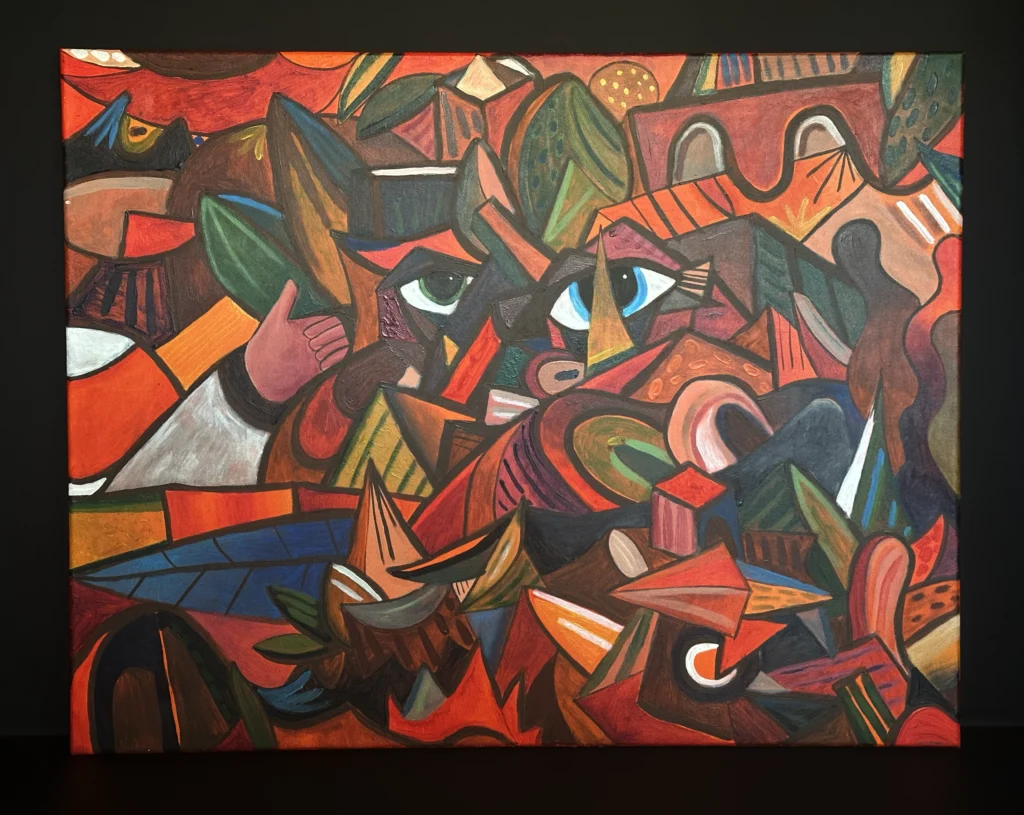
AN INSTINCTIVE AND SINCERE LANGUAGE
What gives Kułakowski’s paintings much of their strength is the sincerity of their gesture. His approach remains deeply intuitive, and this spontaneity prevents the work from feeling overly calculated or rigid. The paintings retain traces of immediacy, as though they were built through emotional impulses rather than predetermined systems. This instinctive quality creates a strong sense of authenticity: the viewer perceives not only formal experimentation but also an artist genuinely attempting to translate inner sensations into visual form.
This relationship between instinct, gesture, and color echoes one of the essential ambitions of Fauvism: the liberation of painting from strict academic control. Kułakowski’s compositions appear to emerge organically, allowing intuition to guide both structure and rhythm. While the repetition of certain compositional strategies may sometimes create a sense of continuity between works, this consistency also contributes to the development of a recognizable and personal artistic vocabulary.
TOWARD AN EVOLVING VISUAL LANGUAGE
Perhaps the most promising aspect of Kułakowski’s practice is the feeling that it remains in active transformation. His paintings already possess a distinct identity, yet they also suggest the possibility of further evolution — toward greater spatial complexity, stronger compositional contrasts, or new relationships between chaos and structure. The tension between excess and control appears to be the central engine of his work. Rather than resolving this tension, Kułakowski embraces it, allowing instability itself to become meaningful.What makes the work particularly compelling is the way it bridges historical influences with contemporary concerns. By reconnecting with the expressive freedom of Fauvism while simultaneously addressing the overstimulation of modern visual culture, Kułakowski creates a pictorial language that feels both familiar and current. His paintings therefore function not only as images but as reflections on perception, emotion, and the difficulty of finding coherence within contemporary experience. This openness gives the work its vitality and points toward a practice with significant potential for future development.


